If you have looked at Lake Minnetonka homes and wondered why two waterfront properties can be priced so differently, you are asking the right question. On this lake, buyers are not just paying for a house or even for shoreline in general. They are paying for a very specific mix of water access, dock usability, exposure, privacy, and long-term enjoyment. Let’s dive in.
Lake Minnetonka Is Not One Waterfront Market
A key thing to understand is that Lake Minnetonka works more like a collection of shoreline micro-markets than one single lakefront market. According to the Minnesota DNR fisheries assessment, Lake Minnetonka covers about 14,004 acres, while other public sources use slightly different measurement methods for acreage and shoreline length.
That difference matters because it reminds you to look beyond broad descriptions. A property on one bay may live very differently from a property on another bay, even if both share a Lake Minnetonka address. For buyers near Glen Lake and across the west metro, that means your search should focus on how a specific shoreline functions, not just whether it is technically waterfront.
What Buyers Really Pay For
When buyers pay a premium on Lake Minnetonka, they are usually paying for a bundle of shoreline features. The home still matters, of course, but waterfront value often comes down to how the lot works on and near the water.
Here are the features that tend to shape value most.
Exposure and Water Setting
Not all shoreline feels the same. Some homes sit on open water, some on bays, some near channels, and some in quieter protected areas. That changes the daily experience in a big way.
The Lake Minnetonka Conservation District, or LMCD, applies a 5 mph slow-speed rule within 300 feet of shore and 150 feet of docks, anchored boats, swimmers, and scuba flags. Public LMCD materials also show quiet-water and channel areas in selected parts of the lake, which helps explain why some shorelines feel calmer than others.
Larger basins can offer wider views and a more dramatic open-water setting. At the same time, they can also feel more exposed to traffic and wake. Smaller coves and protected bays may offer a quieter day-to-day boating and dock experience.
Depth at the Dock
For many buyers, depth at the dock is one of the most practical value drivers. If you plan to keep a particular boat, depth is not a detail. It is essential.
The LMCD notes that depth relative to the lake’s ordinary high water level can vary widely between bays and even within the same bay. Its lake shore owner guidance also explains that dock length and placement depend on shoreline frontage and historical site status, with some shorter-frontage sites allowed to extend to the point necessary to reach 4 feet of water depth, subject to stated maximums.
This is one reason public maps are so useful early in the search. The Minnesota DNR lake map system uses contour lines based on soundings, which can help you spot shallow areas, drop-offs, and bottom changes before you even visit a property.
Frontage and Dock Utility
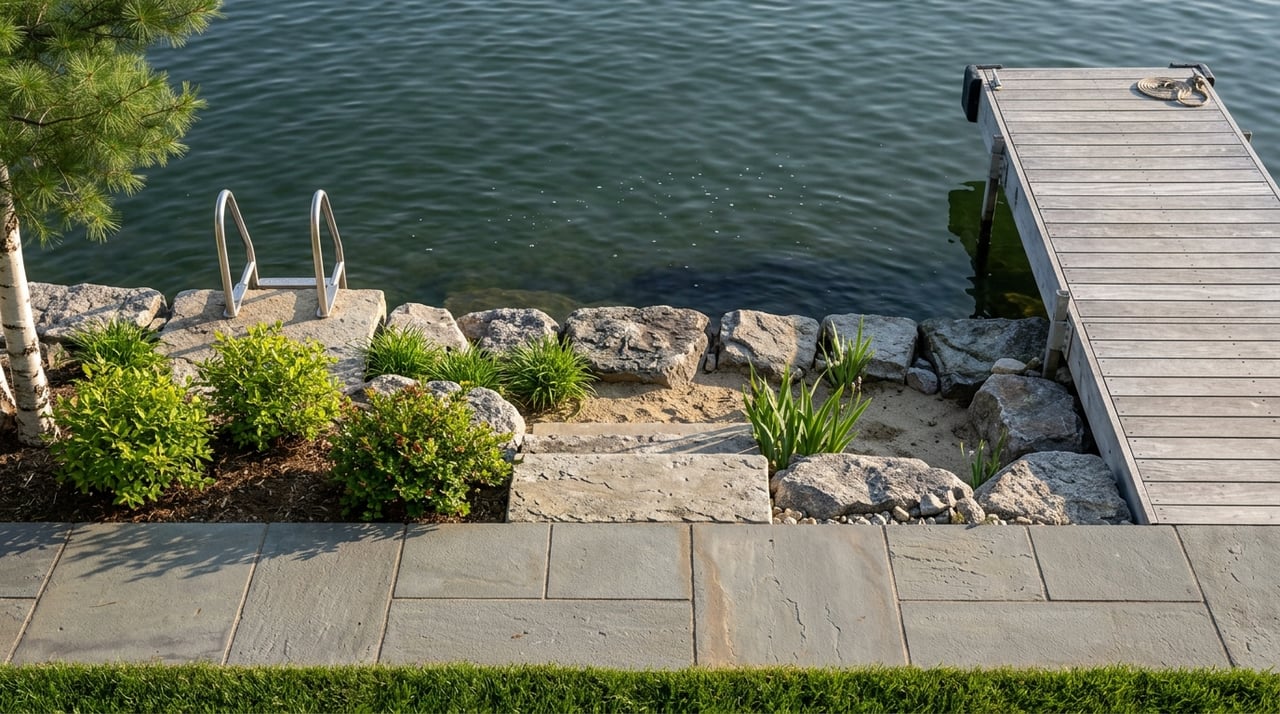
Two properties can have similar square footage and very different waterfront value if their frontage works differently. Private frontage, shared frontage, frontage width, and dock configuration all affect real-world utility.
LMCD also notes that a license may be required in some cases to store five or more watercraft, including certain properties with or sharing 226 feet or more of shoreline and some shared dock situations. In simple terms, usable frontage is not just about how much shoreline you have on paper. It is about how that shoreline can legally and practically be used.
Elevation, Bluff, and Access
A lot’s elevation can shape everything from the view to the walk down to the water. Some buyers love a higher perch because it can create broad sightlines and a stronger sense of privacy. Others want easy, level access for everyday use.
The DNR defines bluffs using measurable grade criteria and advises property owners to maintain or restore natural vegetation because it helps stabilize soils and protect the shoreline. The agency’s shoreland guidance for property owners also notes that limited clearing may be allowed to preserve a water view and access.
Vegetation and Privacy
Natural vegetation is not just a visual feature. It can affect privacy, runoff, shoreline stability, and even long-term lake conditions.
From a buyer’s perspective, mature shoreline planting can soften neighboring views, improve screening, and support a more settled lakeside feel. It can also signal a shoreline that has been maintained with long-term resilience in mind.
Why Rules and Conditions Affect Value
On a heavily used lake, regulations matter. They do not just control what happens on the water. They also shape how a property feels to own and use.
Wake Rules Shape the Experience
Lake Minnetonka is one of the busiest lakes in the region, and that means use patterns matter. The LMCD’s current summer safety rules create buffers that can make one shoreline feel much different from another depending on whether it is located in an open basin, a channel, or a quieter area.
For buyers, this is important because a beautiful lot on paper may offer a very different daily experience depending on surrounding traffic patterns. The right fit often depends on whether you value open-water activity, calmer docking conditions, or a balance of both.
Water Levels Change Utility
Water level is another practical factor buyers should not ignore. LMCD states that a low-water declaration may be made when the lake falls below 928.0 NGVD, and temporary residential dock extensions are allowed only under specific conditions. The district also notes that high water can damage shoreline and dock structures, which is one reason some buyers place a premium on better elevation and more stable access. You can review those details on the LMCD’s water levels and low-water information page.
In real terms, the question is simple: how usable is this shoreline when conditions are less than ideal? The answer can affect both enjoyment and future resale.
Water Quality Is Part of the Value Story
A shoreline’s condition is not only about maintenance. It also affects how the lake looks, feels, and performs over time.
The DNR says natural shoreline vegetation helps slow runoff, filter nutrients, and stabilize soils, and it can also support property values by helping keep lakes clean. That makes shoreline stewardship part of the ownership equation, especially on a lake with many distinct bays and use patterns.
Water quality can also vary by area. The research provided for this article notes that recent watershed reporting found degrading Secchi trends in Grays Bay, Carman Bay, and Lower Lake South, along with degrading phosphorus in Stubbs Bay, while active work is underway in Halsted Bay to reduce phosphorus loading. For buyers, the takeaway is clear: not every shoreline segment offers the same ecological or visual profile.
What Current Market Data Suggests
Even before you narrow your search to waterfront, the broader Lake Minnetonka market is relatively tight and expensive. The Minneapolis Area Realtors market update for February 2026 shows 252 homes for sale, 3.1 months of inventory, a rolling 12-month median sales price of $745,000, an average sales price of $1,081,043, and 66 days on market.
The same report also shows wide variation in rolling 12-month median prices by city around the lake. Minnetonka Beach was about $2.5 million, Orono about $1.294 million, Tonka Bay about $1.25 million, Wayzata about $1.163 million, and Deephaven about $1.072 million.
These are citywide figures, not waterfront-only values. Still, they help explain why a lakefront buyer needs to think beyond city lines and look closely at bay-by-bay and lot-by-lot differences.
A Simple Way to Evaluate Shoreline Value
When you tour a Lake Minnetonka property, it helps to think in layers. Instead of asking only whether you like the home, ask what you are truly buying at the shoreline.
A practical checklist includes:
- Water setting: open water, bay, channel, or quiet-water location
- Depth: actual depth at the dock and route to navigable water
- Dock utility: legal placement, frontage limits, and storage practicality
- Exposure: likely traffic, wake, and overall shoreline feel
- Elevation: ease of access, view lines, and shoreline stability
- Vegetation: privacy, screening, and runoff protection
- Water conditions: how the lot performs during low or high water periods
- Comparable sales: true comps in the same bay or basin, not just the same city
This kind of framework helps you compare properties more clearly, especially when list prices seem hard to reconcile.
Why Local Expertise Matters
On Lake Minnetonka, pricing is rarely about one feature alone. Buyers are often paying for a package that includes depth at the dock, exposure to wakes, dock usability, privacy, elevation, and view quality, with the house layered on top.
That is why local context matters so much. Public tools like the LMCD lake map, DNR contour maps, and local market reports can help you ask better questions and avoid costly assumptions.
If you are considering a purchase on or around Lake Minnetonka, working with an advisor who understands both the lifestyle and the technical details can help you make a more confident decision. For tailored guidance on lakefront property, connect with Debbie McNally to schedule a private consultation.
FAQs
What makes one Lake Minnetonka shoreline more valuable than another?
- Buyers often pay more for a combination of useful frontage, better depth at the dock, favorable exposure, stronger privacy, stable access, and more functional dock setup.
How important is water depth at a Lake Minnetonka dock?
- Water depth is very important because it affects what type of watercraft you can keep at the property and how reliably you can use the dock during changing water conditions.
Do Lake Minnetonka boating rules affect home value?
- Yes. Slow-speed buffers, channel conditions, and the difference between open-water and quieter areas can change how a shoreline feels and functions in daily use.
Should Lake Minnetonka buyers look at bay-specific data instead of city-only data?
- Yes. City-level pricing can provide useful context, but true waterfront value is often shaped more by the specific bay, basin, frontage, and shoreline utility than by the city alone.
What public resources help buyers research Lake Minnetonka shoreline conditions?
- Good starting points include the LMCD lake map, LMCD shore owner guidance, DNR lake contour maps, and recent Lake Minnetonka area market reports.